How to Dispose of LED Lamps Correctly – Sustainability, Recycling and Repair at a Glance
Published February 17th, 2026
As soon as LED lamps or LED luminaires are taken out of service, the legal requirements of the German Electrical and Electronic Equipment Act (ElektroG) apply. At the same time, economic and strategic considerations arise:
- How can LED lamps be disposed of in full legal compliance?
- What recycling rate is realistically achievable?
- What role does repairability play in reducing waste volumes and life-cycle costs?
This article outlines the technical, regulatory and systemic aspects that are already decisive for B2B users at the procurement stage.
|
Why LED Lamps Must Be Recycled: Resources, Obligations, Reality

LED lamps have a significantly longer service life than incandescent or fluorescent lamps. Nevertheless, they too eventually reach the end of their technical or economic life.
As LED lamps and LED luminaires contain electronic components, they are classified as electrical and electronic equipment under the German ElektroG (implementation of the European WEEE Directive). Separate collection and proper treatment are therefore mandatory.
Recycling: What Actually Happens to LED Products?
During the recycling process, LED lamps are dismantled into their material components. Typical components include:
- Electronic assemblies (LED modules, drivers, printed circuit boards)
- Optical elements made from engineered plastics
- Heat sinks, for example aluminium (GLT LED TUBE)
- Glass and metal components
LEDs contain metals such as indium and gallium, along with other technically relevant raw materials. While these materials are in principle recyclable, their recovery is technically demanding.
The actual recycling rate depends largely on product design, material purity and ease of disassembly.
In practical terms: High-quality LED lamps with a material-separable design can achieve recycling rates of up to 90% – significantly higher than many integrated all-in-one systems.
Proper Disposal of LED Lamps: Legal Framework and Responsibilities
End-of-life LED lamps and LED luminaires are classified as WEEE. The legal basis is the German ElektroG, which regulates separate collection and proper treatment in a binding manner.
Manufacturers are required to register with Stiftung EAR.
Operators and companies are subject to organisational obligations relating to collection and disposal.
Practical Implementation in Companies
Companies, municipalities and operators face increased organisational requirements. As volumes increase, so do responsibility and documentation obligations.
- Establishment of central collection points for WEEE
- Transfer to certified specialist waste management companies
- Labelling, documentation and verification obligations, for example within ISO management systems
Private Consumers (For Differentiation)
For end users, disposal is organised with low barriers:
- Delivery to municipal recycling centres or mobile hazardous waste units
- Return via retail collection points
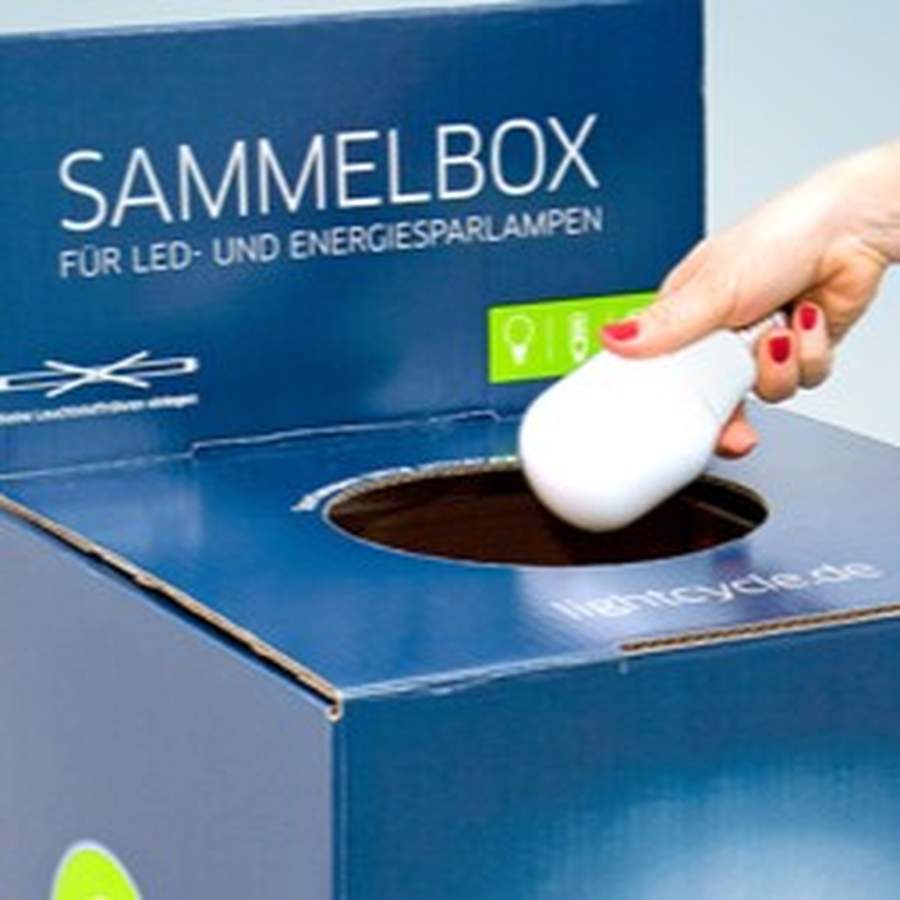
- Use of take-back systems such as Lightcycle
Tip: Lightcycle – Collection Points and Take-Back Systems
Lightcycle coordinates the take-back of lamps and luminaires in Germany.
- Organisation of retail collection points
- Coordination with municipal recycling centres
- Support for commercial take-back solutions
Repair Instead of Disposal: The Decisive Sustainability Lever

The most sustainable form of disposal is the one that is avoided. Repair extends the actual service life of a product and reduces both waste volumes and resource consumption. For operators, repairability is therefore not a minor technical detail but a strategic system decision.
ESPR – The EU Requires Repairable Products
With the updated Ecodesign for Sustainable Products Regulation (ESPR) in 2024, the EU has tightened requirements regarding sustainability, durability and repairability.
Key elements include:
- Requirements for durability and recyclability
- Specifications on spare parts availability
- Introduction of a digital product passport
- Transparency regarding material composition and carbon footprint
Regulatory developments are shifting the focus from pure energy efficiency towards full circularity across the entire product life cycle.
Common Pitfall: Repairability – Lamp or Complete Luminaire?
In practice, there is a clear distinction between:
- Replaceable LED lamps in standardised luminaires (LED retrofit systems)
- Integrated LED luminaires with permanently built-in LED modules
In integrated systems, the failure of a single component often results in replacement of the entire luminaire. With standardised LED lamps (e.g. 1:1 replacement solutions using standardised sockets such as T5/G5 or T8/G13), selective replacement or repair is possible.
A system decision with long-term impact:
- Different waste volumes
- Different disposal weights
- Different investment cycles
- Different levels of circularity
Those who procure integrated systems today effectively determine the disposal volumes of the next 10–20 years.
Repair and Recycling in Practice: The GLT LED TUBE Example
The GLT LED TUBE is repairable and approximately 90% recyclable. German LED Tech provides a five-year warranty. Defective GLT LED TUBES are taken back and repaired within this period.
After the end of service life, German LED Tech credits € 5 for each returned GLT LED TUBE when purchasing a new GLT LED TUBE.
Glossary
LED Lamp (Light Source)
- A replaceable light module with a standardised base (e.g. T8, E27).
- It is operated within a separate luminaire and can be replaced individually in case of failure.
- For operators, this means lower replacement costs and reduced waste volumes.
LED Luminaire
- A complete lighting unit consisting of housing, electronics, optics and typically permanently integrated LEDs.
- If individual components fail, replacement of the entire unit is often required.
- You have not enough Humanizer words left. Upgrade your Surfer plan.

Do you have any questions about the GLT reusable system and the advantages of circular lighting solutions?
Discover the GLT LED TUBE product range – our experts will be pleased to advise you.